Guide
Word-by-word read-along for early readers
Last updated 2026-08-26

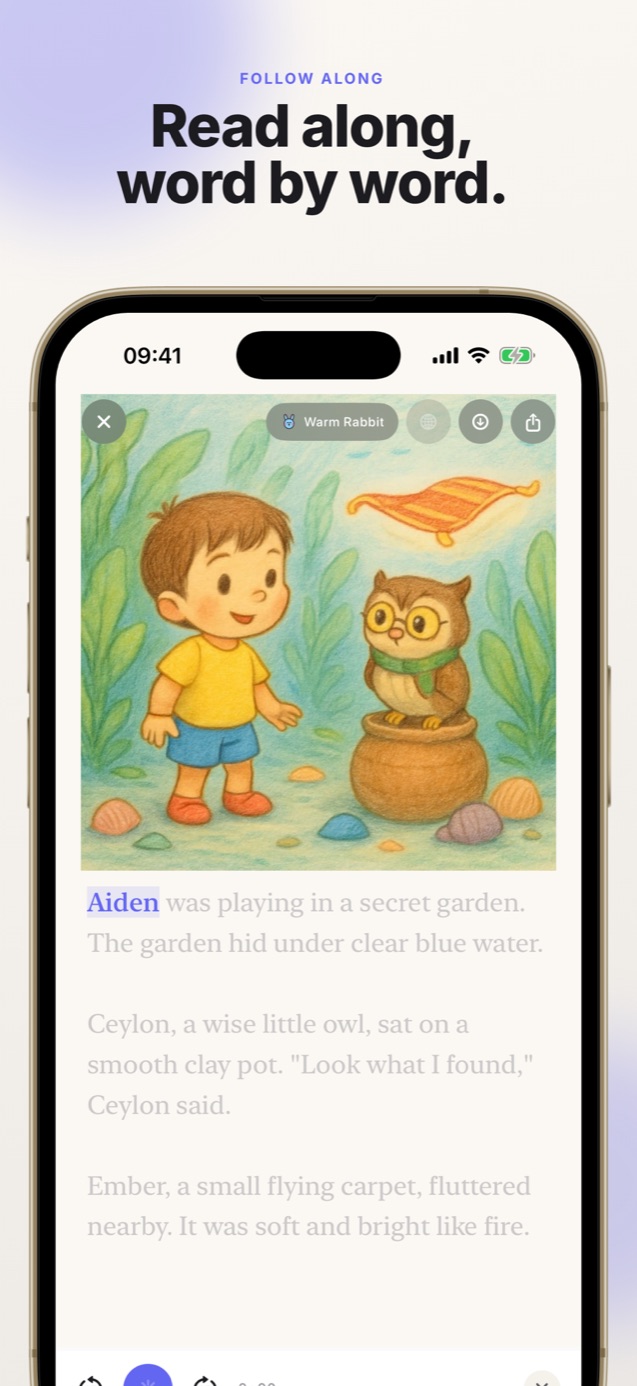
Word-by-word read-along lights up each word as it is spoken, so a child can see the print that matches the sound. Line-level karaoke is not enough for early readers. Faybley aligns narration to individual words so the voice and the page stay in the same place.
Why word-level beats line-level
Early readers often know a few words by sight and guess the rest from pictures. When narration jumps a whole line at once, they lose the map between sound and spelling.
Highlighting one word at a time gives a moving target they can point to. Pair that with a familiar voice and the page feels less like a test.
How to use read-along at home
Sit together for the first few stories even if the phone is narrating. Ask your child to touch the glowing word. That small action builds print awareness.
Keep sessions short. Five to ten focused minutes beat a long stretch where attention drifts and highlighting becomes background noise.
Pairing with personalized text
When the hero's name is your child's name, the first highlighted word is often one they already care about. That is a gentle on-ramp into denser vocabulary later in the story.
Faybley adjusts sentence length by age profile, so read-along stays useful from preschool listening through early independent reading.
Quick answers
- Does read-along work offline?
- Yes. After you download a story, narration and highlighting both work without a network connection.
- Is this a full phonics curriculum?
- No. Read-along supports print-to-sound mapping during storytime. Faybley's Learning Trails add story-led practice across reading and other subjects, but it is not a school phonics program on its own.